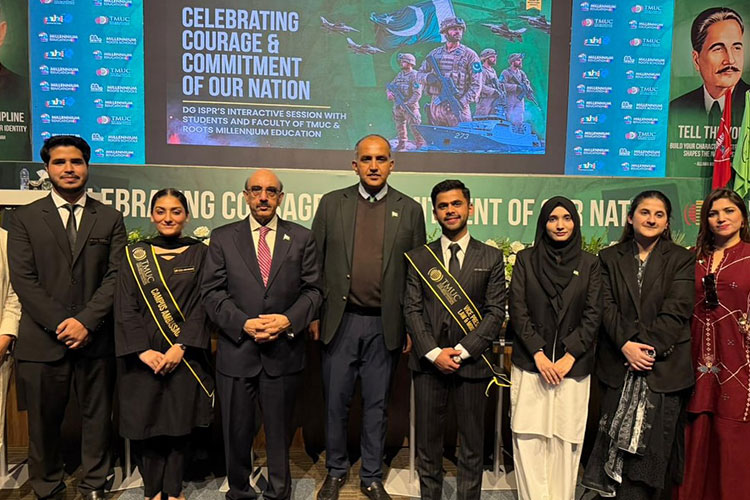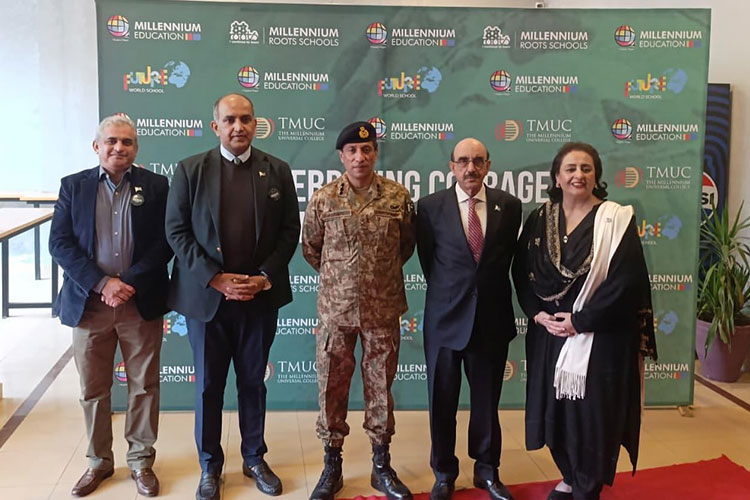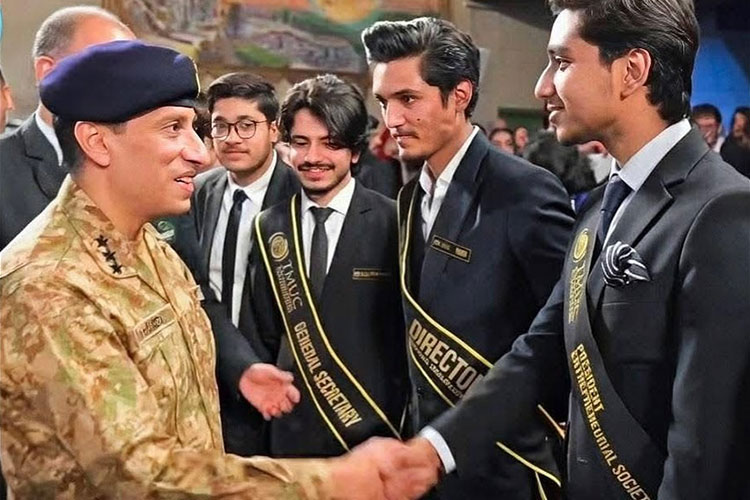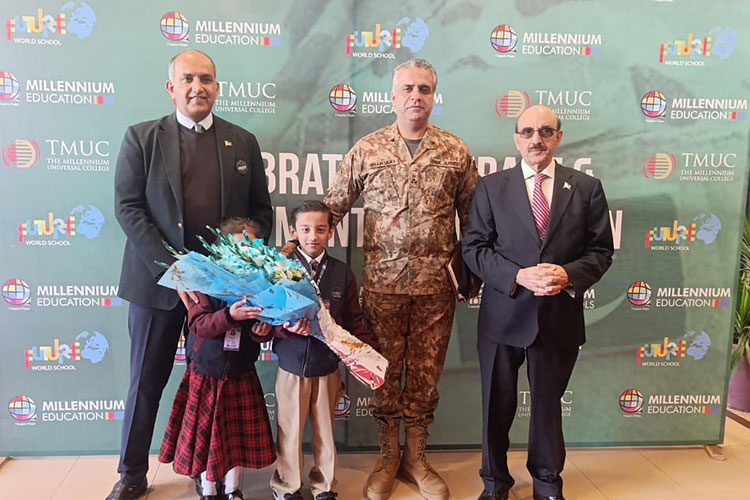
The Millennium Education Group hosted DG ISPR Lieutenant General Ahmed Sharif Chaudhry for an interactive session with students focused on national security, digital citizenship and the responsibilities of young people in shaping Pakistan’s future. Rather than treating these subjects as distant or purely institutional issues, the session connected them with the realities students encounter in their everyday lives, particularly through social media, online communication and the rapid circulation of information.
A central feature of the session was the opportunity for students to ask questions directly. Their questions addressed issues including online misinformation, responsible use of digital platforms and the relationship between national security and the digital environments in which young people increasingly spend much of their time. The direct question-and-answer format allowed students to explore issues that can often be difficult to address fully through conventional classroom lessons.
The discussion also gave students an opportunity to consider the difference between simply consuming information online and becoming responsible digital citizens. In an environment where social media can amplify both accurate information and misleading or manipulated content, students were encouraged to think more carefully about what they read, share and communicate. The conversation placed emphasis on personal responsibility, critical thinking and awareness of the wider consequences that individual online actions can have.
The presence of a senior military and communications official provided students with access to a perspective they would not ordinarily encounter within a school setting. Meeting Lieutenant General Ahmed Sharif Chaudhry in an educational environment created space for a direct exchange between students and a senior public official, allowing young people to raise questions and engage with subjects that extend beyond their formal curriculum.
For Millennium students, the session therefore served as a practical extension of education in citizenship and contemporary affairs. It connected classroom concepts such as responsibility, critical thinking and civic awareness with issues students encounter every day. By encouraging them to question, listen and reflect on their own role in the digital sphere, the session reinforced the idea that preparing young people for the future involves not only academic achievement, but also developing the judgment and responsibility required to participate constructively in society.